
On 19 November, I spoke at the ADHD in Business Conference in Waterford about one of my favourite topics: strategy. This blog is a shortened version of my speech, and I hope it helps you to think differently about strategy.
Gemma
Strategy and strategic thinking are my brain having fun. It's seeing patterns, connections, outliers, unanswered questions, root causes and consequences, sometimes in seconds. Then bringing it together to understand, see possibilities and decide what to do next.
To me, strategy is a living, active tool. Not a theoretical 20-page document presented once and never looked at again. It applies everywhere, every day.
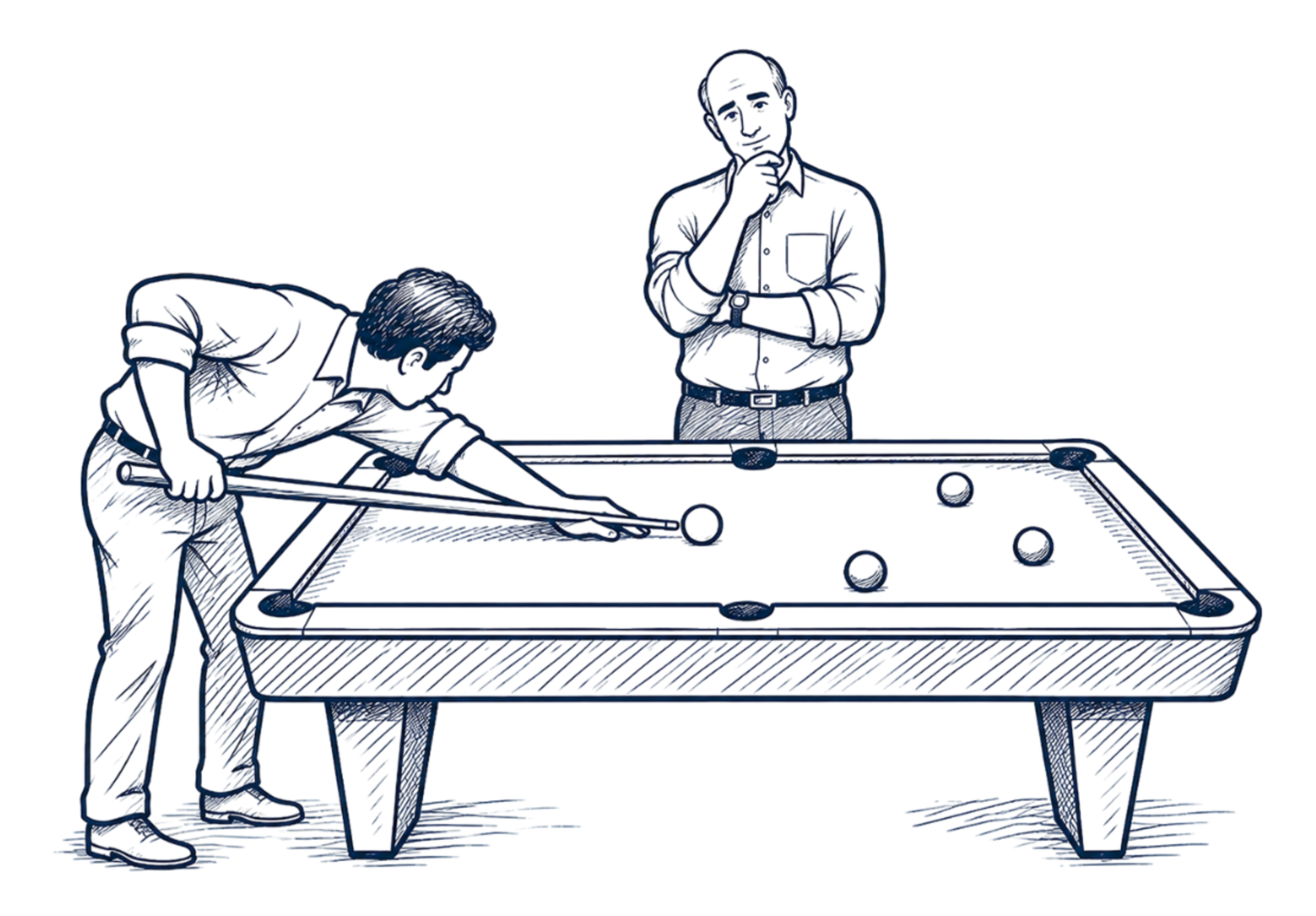
I was around 11 when I was first called a strategist. I was watching my dad play pool when his boss looked at me and said, out of nowhere, “You're a strategist.” He'd noticed me studying the table and considering the next best move. I wasn't sure what to do with that observation, but it stayed with me and ultimately I used this skill in all my roles and work going forward.
The Strategy Stack
To make strategy works for us, I’ve created a simple structure I call the Strategy Stack:
Define what you want to achieve.
Discover where you are now and what you need to understand.
Design a way forward that takes both into account.
Deliver it, measuring and adapting as you go.
Define: What do you want?
It's one of the first questions I ask clients.
Not what sounds good or what somebody else expects. What do you actually want to achieve? Under what conditions? Why?
My definition of strategy is quite simple: Strategy is how you get what you want.
That might mean growth, a stronger team, a healthier working life, a change of direction, an exit or something else entirely. The answer matters because it gives you a way to decide your options, priorities and what you say yes or no to going forward.
This thinking is hardly new. More than 2,000 years ago, Chinese general Sun Tzu wrote about knowing yourself and the situation, choosing your battles, preparing well and shaping the conditions for success. Well known phrases like “Measure twice, cut once” or ‘Kill two birds with one stone” makes a similar point.
Once we know what we want, the next question is: what are we going to do about it?

Sun Tzu: The Art of War
Discover: What aren't we seeing?
This is my favourite part. Research and assessment might sound dull, but in my work it's more like becoming Miss Marple: observing, asking questions and following the clues until the situation starts to make sense.
We need to understand the reality we're dealing with: the people, context, conditions, resources, risks, assumptions and limits. Not just the version of events that happens to be most visible.
Here's where different minds and perspectives become particularly useful.
Difference disrupts default.
Someone might notice a problem everyone else has learned to tolerate, a communication gap nobody mentions, or an opportunity dismissed because “we've always done it this way.”
Think of one frustrating issue that keeps recurring in your business. Whose perspective might be missing from how you understand it? What might they see that you don't?
I recently facilitated a focus group exploring what might help people with different minds at work. Interestingly, the group began identifying changes that could improve the experience for everyone, not just those who had inspired the discussion.
Difference can be the inspiration, but the benefits can be much wider.

Miss Marple by Agatha Christie
Design: Make the conditions work for greater success
I've seen businesses with great ambitions and capable people struggle to achieve what they want. Not necessarily because the strategy is wrong, but because the conditions needed to deliver it aren't in place.
That's part of what led me to develop the Shared Design Operating Framework©. It brings together three questions:
What does each individual need to contribute well?
What does the team need to work well together?
And what does the company need to achieve its objectives?
Consider a small service business with a client proposal due on Friday. The owner has the entire plan in their head. The team has three different understandings of who's doing what. Thursday arrives and nothing is ready for sign-off.
There are individual, team and company considerations here: getting the plan out of the owner's head, agreeing responsibilities and deliverables, and setting clear standards and sign-off arrangements. The client, meanwhile, just wants a reliable result.
This is not about everyone doing things their own way. It's about creating enough clarity, trust, flexibility and structure for people to contribute well, together, towards a shared outcome.
A director once told me, after an extensive business operations review and transformation, “You gave me my voice.” We had achieved significant change for the business, but that comment captured something else: what the right conditions and support can make possible.
At Catalyst & Co, I help business owners understand what's happening, decide what needs to change and make it work in practice. The effects reach the customer too.
Deliver: Put the thinking to work
Then comes action. And adapting, because real life rarely unfolds exactly as planned.
The aim is to get ahead of avoidable confusion or problems, make informed changes, and keep the desired outcome in view. Sometimes that's a substantial transformation. Sometimes it's a clearer conversation, a better-defined responsibility or a small change that stops an issue recurring.
Different minds, voices and perspectives can change what we see, what we decide and ultimately what we do. That's an opportunity for individuals, teams and businesses alike.
And because no discussion about strategy would be complete without a chess reference: think of the queen, with more possible moves than any other piece on the board. Use her well.
What is your next strategic move?
If you are curious how well your business is set up to deliver its strategy, try my five-minute Shared Design Scorecard for an indicative score and some preliminary insights.